Get in Touch
For most students, exams are not just about studies. They are about pressure, panic, self-doubt, speed, mindset, and performance under stress.
Especially in professional courses like CA, students often prepare for months or even years, yet struggle to perform at their true potential on exam day
One of the best things a student can do before exams is to sit and write proper Mock Test Papers (MTPs). Write them seriously in proper exam conditions.
MTPs train your writing stamina, speed, time management, concentration and confidence. The more exam-like practice you do before the actual exam, the calmer your brain remains during the real paper.
In class, mistakes get corrected together. One student notices an error, another checks totals, and someone else identifies missed adjustments.
But when you sit alone, there is nobody to catch small calculation errors, totaling mistakes, or missed adjustments. That is why self-checking becomes important
Maintain a dedicated error notebook where you write all your repeated mistakes.
Examples:
Tracking mistakes increases self-awareness. Over time, repetition reduces and accuracy improves naturally.
Most students say the same thing: “Paper complete nahi hota.” The biggest reason is usually starting too slowly.
Your first sum and last sum should have the same pace and control. Focus on readable presentation, not decorative presentation.
Think about exams like a T20 match. Momentum matters. You cannot solve slowly for the first two hours and suddenly expect speed later.
Ask yourself while solving every question:
“Can I maintain this same speed in the last 15 minutes of the exam?”
One of the best things a student can do before exams is to sit and write proper Mock Test Papers (MTPs). Write them seriously in proper exam conditions.
MTPs train your writing stamina, speed, time management, concentration and confidence. The more exam-like practice you do before the actual exam, the calmer your brain remains during the real paper.
If the answer is no, you are solving too slowly in the beginning
After exams, students often start checking every answer and comparing marks. Slowly confidence drops and stress increases for the next paper.
What’s done is done. Protect your energy for the next exam instead of emotionally attaching yourself to a completed paper.
Reach the exam centre at least 30 minutes early. One hour early is even better.
Even a small traffic delay near exam time can disturb your heartbeat and mental stability. A calm brain performs better.
Last-minute panic reading only increases anxiety and self-doubt.
If something was not learned in 1.5–3 years of preparation, it will not suddenly happen in the final 20 minutes.
Keep your books away. Sit calmly. Relax your breathing. Trust your preparation.
Some people discuss only to create panic and pressure.
A real friend guides you calmly and helps you improve without damaging your confidence.
Protect your mindset. Your mental energy matters during exams.
By exam time, your work is already done. You have attended classes, revised concepts, solved questions and practiced MTPs.
Enter the exam hall with confidence, calmness and positive energy. Stress never improves performance. A calm mind does.
Exams are not only a test of knowledge. They are also a test of discipline, consistency, mindset and emotional control.
Remember
You have already worked hard. Now walk into the exam hall calmly. Smile. Write. Perform
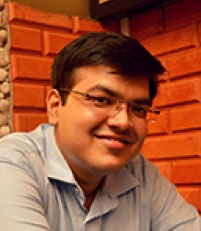 Aswini Bajaj
HEY ! IT’S ME
I’m a Commerce graduate from
St. Xavier’s College,
Kolkata and have completed
CA (Rank holder),
CFA(USA),
FRM(USA), CAIA(USA) and CS.
At present, I am a visiting
faculty at St. Xavier’s
College, NSE,
BSE; B-Schools
like iLead, BIBS along with
several other institutes; am
a full time trainer for CFA,
FRM and
SFM – CA
Final. Provide trainings at
organizations like Tata
Interactive Systems,
Volvo-Eicher(VECV),
Genpact, AIITA,
EIRC-ICAI etc. on Finance
and Advance Excel.
I have been teaching CFA,
FRM and Capital Market
courses; conducting Excel
workshops, etc. for
the past 3
years in Mumbai, Delhi and
Kolkata. Have conducted
Career Seminars for St.
Xavier’s School and
College, Shri
Shikshayatan, The Heritage
School, Loreto, etc. Have
worked at Cairn India in the
MIS, Budgeting
and
Forecasting profile along
with articleship experience
of 3 years prior to that.